


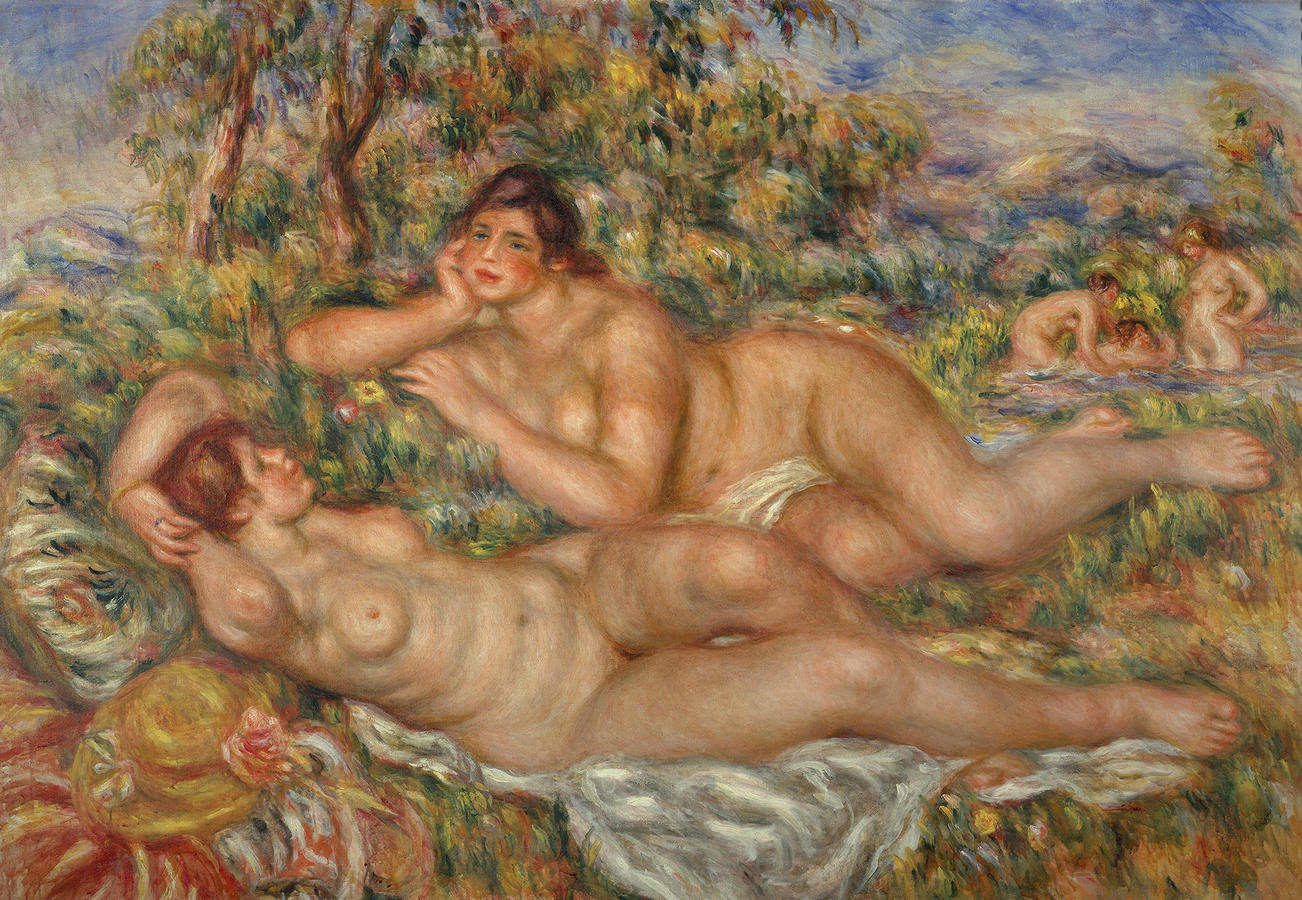
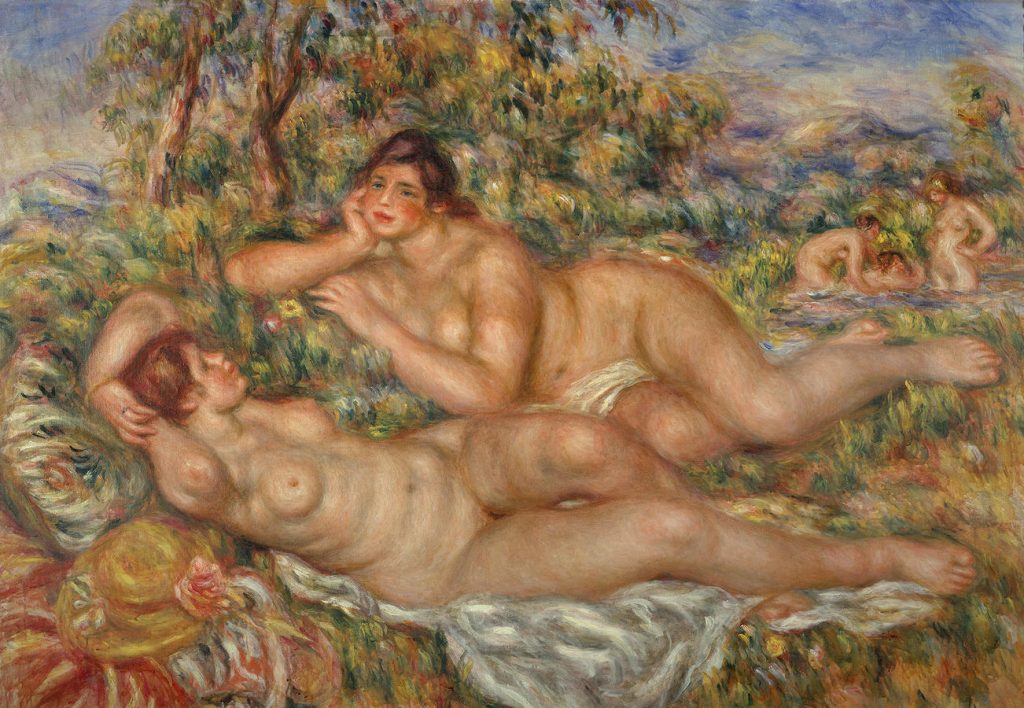
Pierre-Auguste Renoir “The Bathers,” 1918-19. Musée d’Orsay, Paris Photo by Hervé Lewandowski © RMN-Grand Palais/Art Resource, NY
Renoir: The Body, The Senses is the first major exhibition ever to focus on the artist’s lifelong treatment of the nude. The exhibition, debuting on the centenary of the artist’s death, provides new perspectives about Renoir’s stylistic trajectory through the lens of the singular subject. Over the course of his career, Renoir rendered bustling cityscapes, captured portraits, and impressions of fashionable society, and recorded fleeting atmospheric effects upon the landscape, but his overarching preoccupation was the nude the subject that he felt would put him alongside the great artists of the past. Renoir’s unique approach to figure painting was a vital influence on the art of his time, and his many paintings, pastels, drawings, and sculptures were championed by generations that followed.
Renoir: The Body, The Senses opens at the Kimbell on October 27, 2019, it is co-organized by George T. M. Shackelford, deputy director at the Kimbell, and Esther Bell, the Robert and Martha Berman Lipp Chief Curator at the Clark.
“The response to this exhibition in Massachusetts has been extraordinary, and I look forward to its installation in Fort Worth,” commented Eric M. Lee, director of the Kimbell Art Museum. “Our curators’ concerted scholarship and enthusiasm for this never-explored topic have resulted in an important gathering of some of the artist’s most noted masterpieces, along with works by the famed artists who were Renoir’s forebears, contemporaries and followers. These are among the most prized possessions in the national and international collections they come from, and I am grateful to all our lenders for their generous contributions. I am especially grateful to the Clark Art Institute for their ongoing partnership and collaboration.”
Featuring approximately 60 paintings, drawings, pastels and sculptures by Renoir as well as works by his predecessors, contemporaries, and followers, the exhibition’s roster is exceptional. Highlights include five paintings from the Musée d’Orsay and Musée de l’Orangerie, Paris: Boy with a Cat, 1868; Study: Torso, Effect of Sun, c. 1876; the full-length Reclining Nude and Large Nude on Cushions, 1906 and 1907; and The Bathers, 1918–19. These join paintings and sculpture from such institutions as the National Gallery, London, the National Gallery of Art, Washington, D.C., the Metropolitan Museum of Art, New York, the Art Institute of Chicago, the Museum of Fine Arts, Boston, and the Dallas Museum of Art, as well as from the Clark’s renowned collection of the artist’s work, to survey the breadth of Renoir’s career. This exhibition redefines Renoir as a brilliant, radical and influential artist of the modern age, reconsidering him as a constantly evolving artist who participated in myriad movements, including Realism, Impressionism and Modernism.
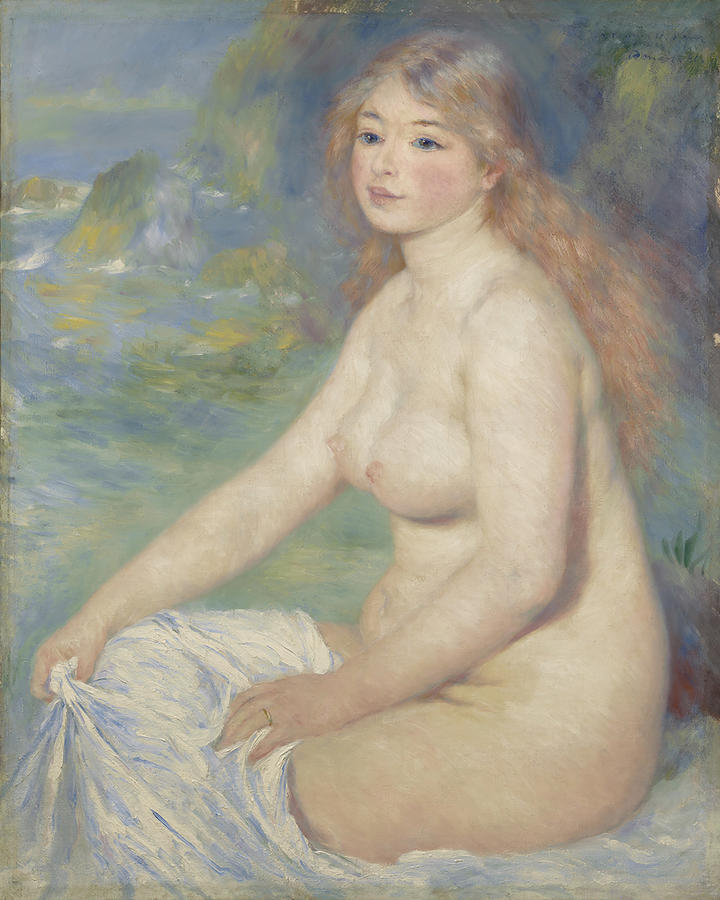
Pierre-Auguste Renoir, “Blonde Bather,” oil on canvas, 1881. The Clark Art Institute, Williamstown, Massachusetts Acquired by Sterling and Francine Clark, 1926
Renoir: The Body, The Senses seeks to place Renoir’s preoccupation with the nude in a rich historical context. “We decided to look at Renoir both across the span of his lifetime and against the background of history,” said George Shackelford. “By showing Renoir’s works alongside those of artists as diverse as Boucher, Degas, and Picasso, we’re hoping to demonstrate the ways in which his achievements grow out of the past, react to his presence and exert a profound influence on the future. We think these juxtapositions will surprise and delight exhibition visitors.”
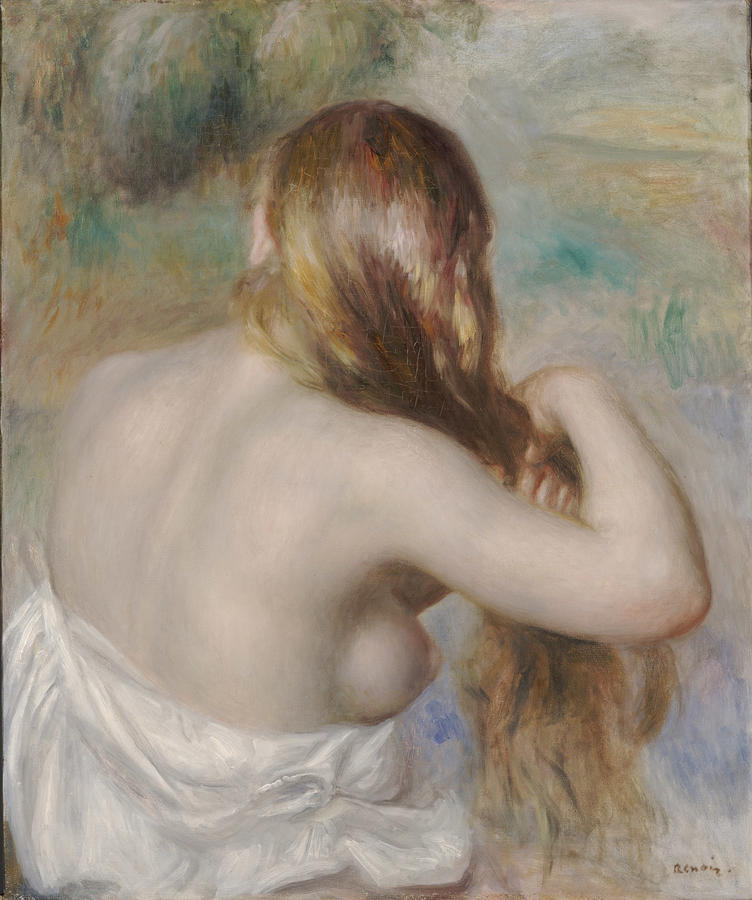
“Our exhibition will survey Renoir’s long career through the lens of the single subject that defines his legacy,” said Esther Bell. “It’s the subject that most compellingly demonstrates how truly radical, and so often brilliant, he was.”
Renoir: The Body, The Senses will be on view through Jan. 26.