


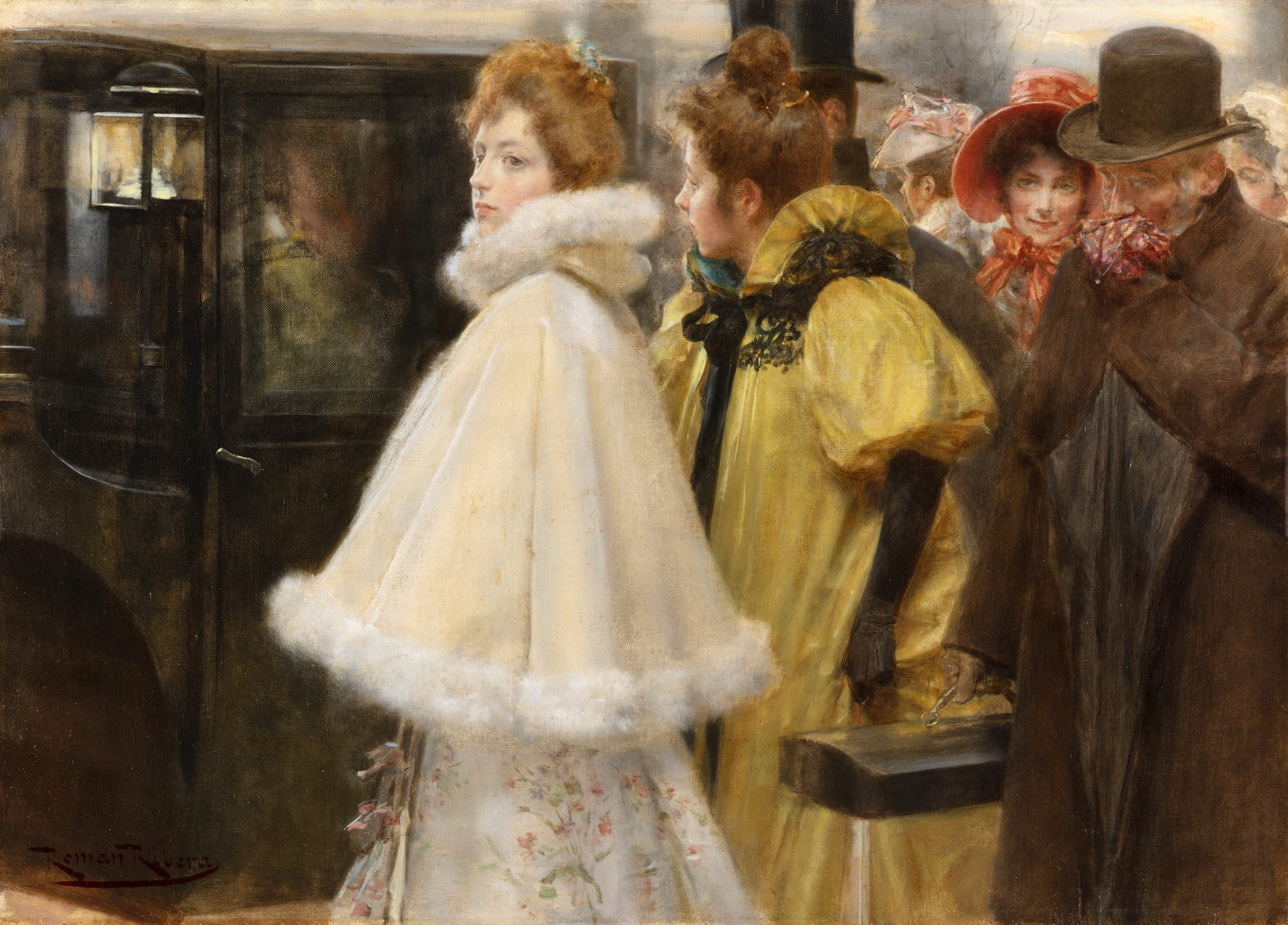
The Meadows Museum at SMU has added seven important works of Spanish art, from the 17th through the 20th centuries, including three paintings and four works on paper. The three paintings—Francisco de Herrera’s Saint Francis (1635), Román Ribera Cirera’s Leaving the Ball (1901), and Antonio Rodríguez Luna’s Still Life (Naturaleza Muerta) (1981)—all enter the collection thanks to donations made to celebrate the life and leadership of Dr. Mark A. Roglán, who was the director of the Meadows Museum for 15 years and who died last year on October 5th to cancer. Two additional paintings were donated to SMU’s University Art Collection (UAC), managed by the Meadows Museum: Larry Horowitz’s landscape Pleasant Bay with Boats (1999) and former SMU Professor of Art Roger Winter’s Self-Portrait (2013).
“Under Mark Roglán’s dynamic leadership, the Meadows Museum has become one of SMU’s brightest beacons,” said SMU President R. Gerald Turner. “Through his unflagging devotion, energy and intellect, Mark built a prestigious museum and collection that brings great honor to the vision of its founder, Algur Meadows. Mark leaves behind a profound legacy.”
Amanda W. Dotseth is currently the interim director and curator at the Meadows Museum and was the assistant curator between 2006 and 2009. She completed her PhD on Romanesque Architecture at the Courtauld Institute of Art in 2015 and has held fellowships with Fulbright, Mellon, and the Spanish National Research Council. She continues in the mission guided by Roglán.
“These acquisitions of Spanish paintings and prints in memory of Dr. Roglán participate in the fulfillment of the museum’s mission to tell new stories about the history of Spain and its art,” said Meadows Museum Director ad interim and Curator Amanda W. Dotseth. “The works also represent different historical moments, from the early modern to contemporary periods, and are prime examples mostly by artists hitherto not represented in the permanent collection. They likewise promise to inspire new educational opportunities for campus and North Texas communities. The donations to the University Art Collection represent major additions to our holdings by Texas and SMU artists that expand upon existing holdings thereof.”
Francisco de Herrera (c.1590–1654)
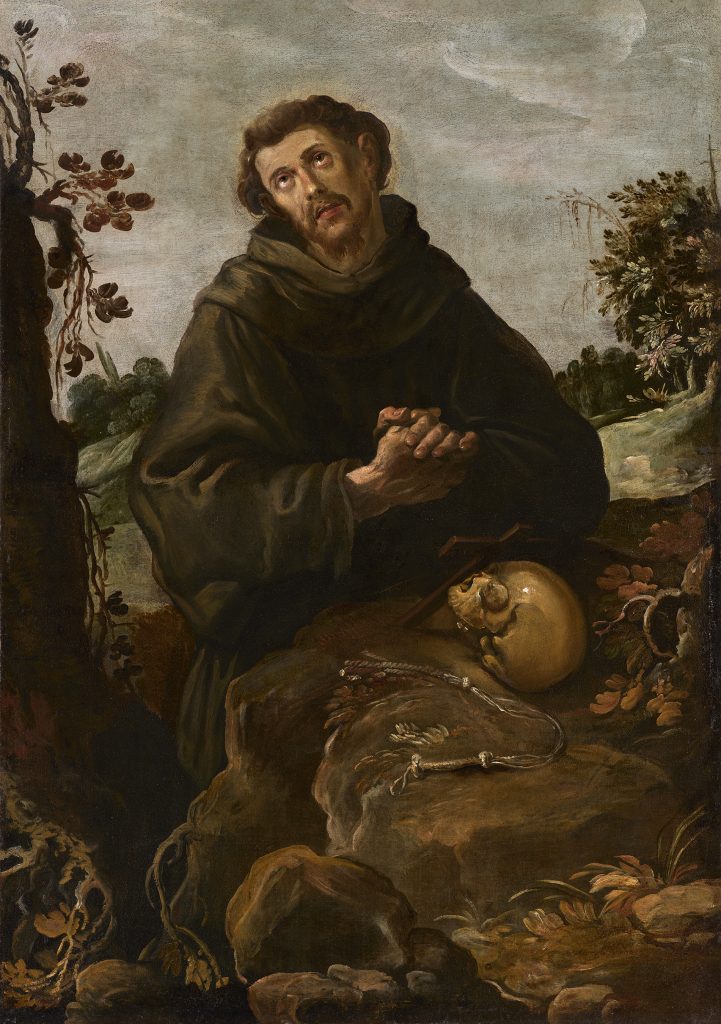
Saint Francis, c.1635
Oil on canvas, 53.50 x 38 in.
Gift of Galeria Caylus (Madrid) in honor of Director Mark A. Roglán
Francisco de Herrera (also known as Francisco de Herrera the Elder) began his career in Seville in the early 17th century, where he completed a number of commissions before relocating to Madrid around the 1640s. Among his many commissions were the Vera Cruz chapel of the Convent of San Francisco, the main altarpiece for the church of the Colegio de Teología de la Compañía de Jesús, and the main altarpiece for the church of the Franciscan convent of Santa Inés.
Saint Francis is the first painting by the artist to enter the Meadows’s collection, complementing a drawing already in the holdings of the museum. The work was completed during a period of intense productivity for Herrera the Elder, contemporaneous with many of his most important commissions as well as his production of smaller devotional images of individual saints, of which this is a prime example. Here, Herrera the Elder has depicted Saint Francis as a penitent shortly before his stigmatization. Analyisis of the painting with X-radiography reveals that the artist originally intended to paint Saint Francis in profile, similar to works by other Spanish artists of the period. However, as he developed the composition, he evidently chose to engage the viewer more directly by depicting the popular saint facing outward as he gazes toward heaven, his woundless hands clasped in prayer. Surrounding details—a skull, cross, and knotted cord, representing the vows of poverty, chastity, and obedience—signal Francis’s piety to the viewer.
Román Ribera Cirera (1849–1935)
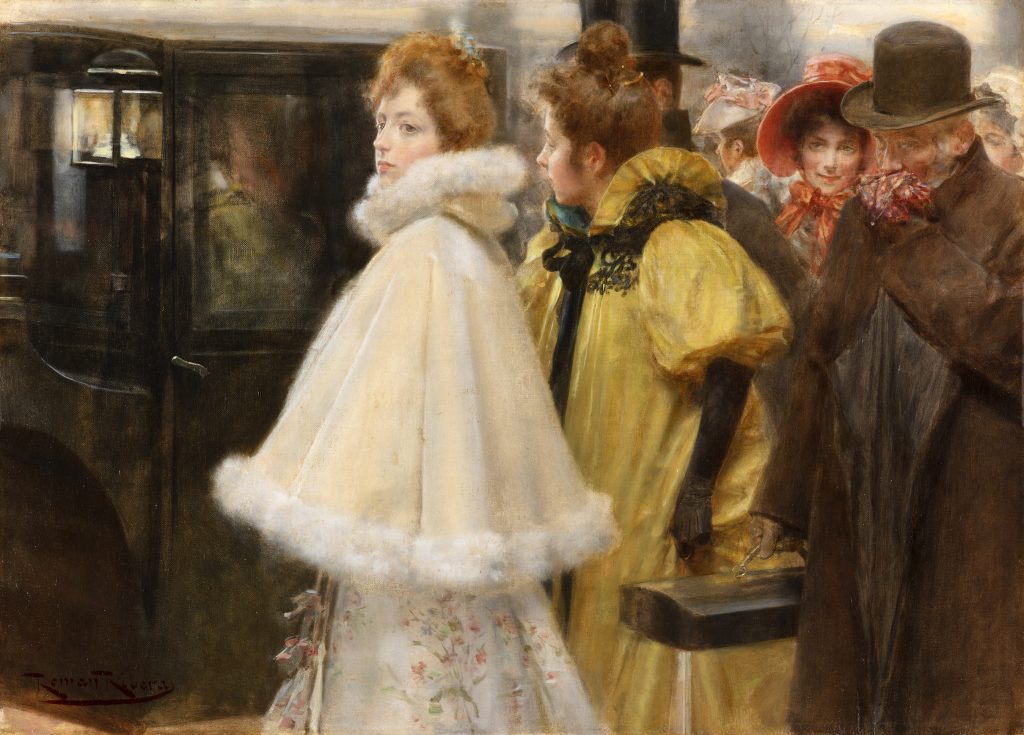
Leaving the Ball, c. 1901
Oil on canvas, 23 x 32 in.
Museum purchase with funds provided by friends of the Meadows Museum in honor of Mark A. Roglán.
Originally from Barcelona, Román Ribera Cirera was among a handful of Spanish artists who enjoyed commercial success in Paris. Much like the work of Mariano Fortuny y Marsal, Ribera Cirera’s paintings of modern life in the French capital proved popular among collectors. However, with Leaving the Ball (1901), Ribera Cirera appeared ready to break away from those constraints, presenting a more Impressionist-inspired look at a group of fashionable partygoers. This view is supported by archival material in which the artist wrote of his desire to change paths to be more focused on his own ideas and not the demands of his dealer.
The scene presented—featuring a well-dressed group looking for a taxi after a ball—draws the viewer’s attention especially to three figures as the eye moves across the work. First is a woman wearing a fur-trimmed ivory cape over a floral dress, presented in profile with her body turned in one direction and her face looking toward the left side of the painting. Next to her is another woman facing away from the viewer; she wears a vibrant yellow cape, a fixture of other works by Ribera Cirera, which suggests it may have been one of his standard studio props. The last of the three women stands with her face framed by a colorful orange bonnet and looking directly at the viewer. Finally, at the right edge, a workman stands holding a toolbox, and wearing an overcoat and hat painted in muted browns and blacks that contrast with the colorful fashion of the women.
Antonio Rodríguez Luna (1910–1985)
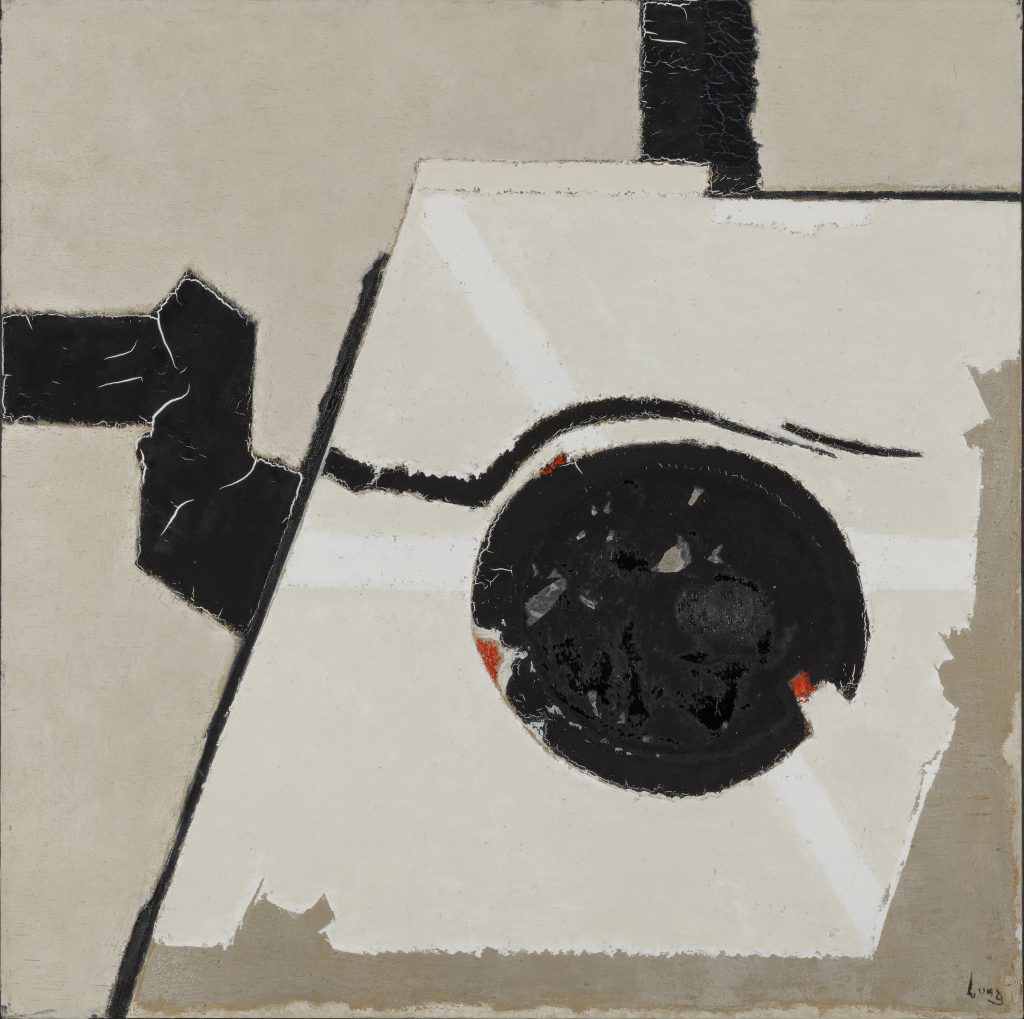
Still Life (Naturaleza Muerta), 1981
Oil on canvas, 39.50 x 39.50 in.
Anonymous gift in honor of Mark A. Roglán.
Still Life (Naturaleza Muerta), is an abstract work principally in black and white, but accented by small elements of red on the black circle at the center of the composition. Made late in Rodríguez Luna’s career, the painting evokes the figurative style of many of his earlier works—the circle in the center of the work is suggestive of traditional art historical still lifes—while remaining firmly abstract.
Rodríguez Luna, who was labeled “the painter of the Spanish diaspora” by the poet Juan Rejano, spent much of his adult life in exile in Mexico, avoiding the long period of Franco’s dictatorship. As an addition to the Meadows’s collection, it provides an important opportunity to highlight the work of a Spanish artist in exile while strengthening the museum’s collection of post-1980 paintings. It compliments other twentith-century holdings of the permanent collection, such as paintings by Antonio Saura, Fernando Zóbel, Antoni Tàpies, and Barceló.
The museum’s other recent Spanish art acquisitions include:
Francisco José de Goya y Lucientes (Spanish, 1746–1828)
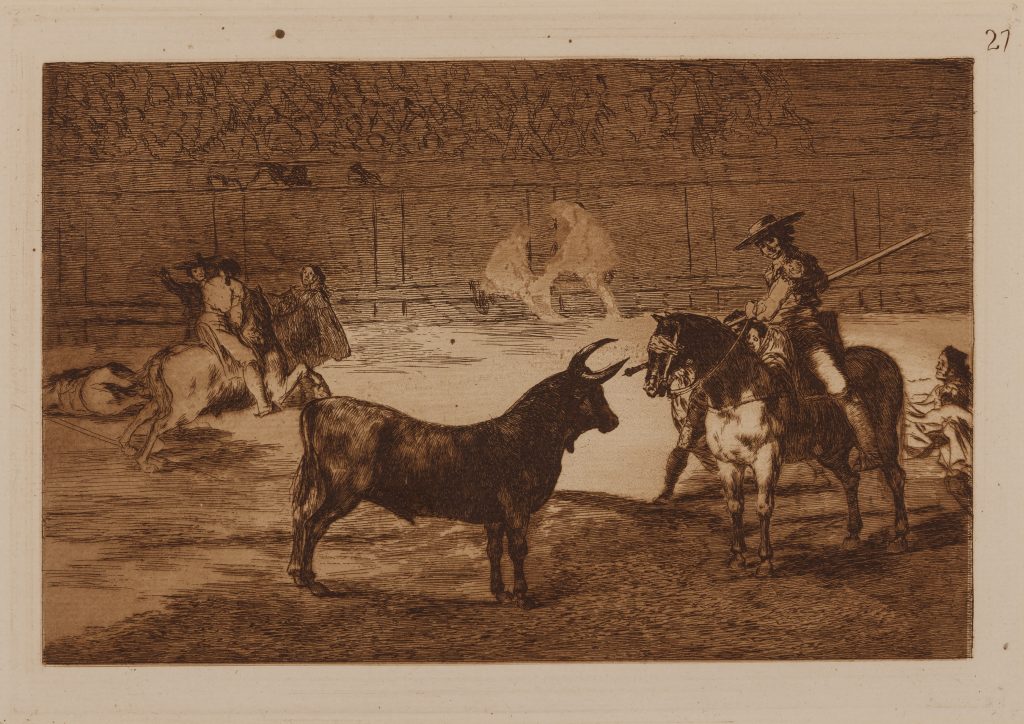
The celebrated picador, Fernando del Toro, draws the fierce beast on with his pique (El célebre Fernando del Toro, barilarguero, obligando á la fiera con su carrocha), plate 27 from the series Bullfighting (La Tauromaquia); drawn and etched c. 1814–16, fifth ed. printed 1921
Etching, burnished aquatint, drypoint and burin; 9.50 x 13.75 in.
Gift of H. Glynn Childers.
Francisco José de Goya y Lucientes (Spanish, 1746–1828)
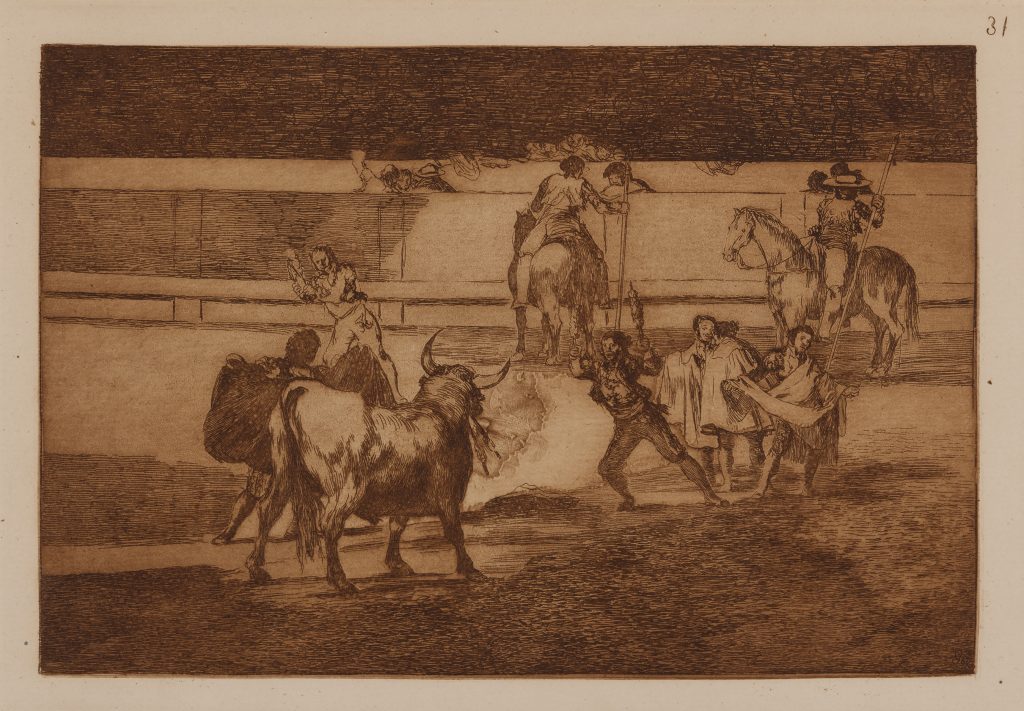
Banderillas with firecrackers (Banderillas de fuego), plate 31 from the series Bullfighting (La Tauromaquia); drawn and etched 1815–16, fifth ed. printed 1921
Etching, burnished aquatint, lavis, drypoint and burin; 9.62 x 13.87 in. Gift of H. Glynn Childers.
Manel Anoro (Spanish, b. 1945)
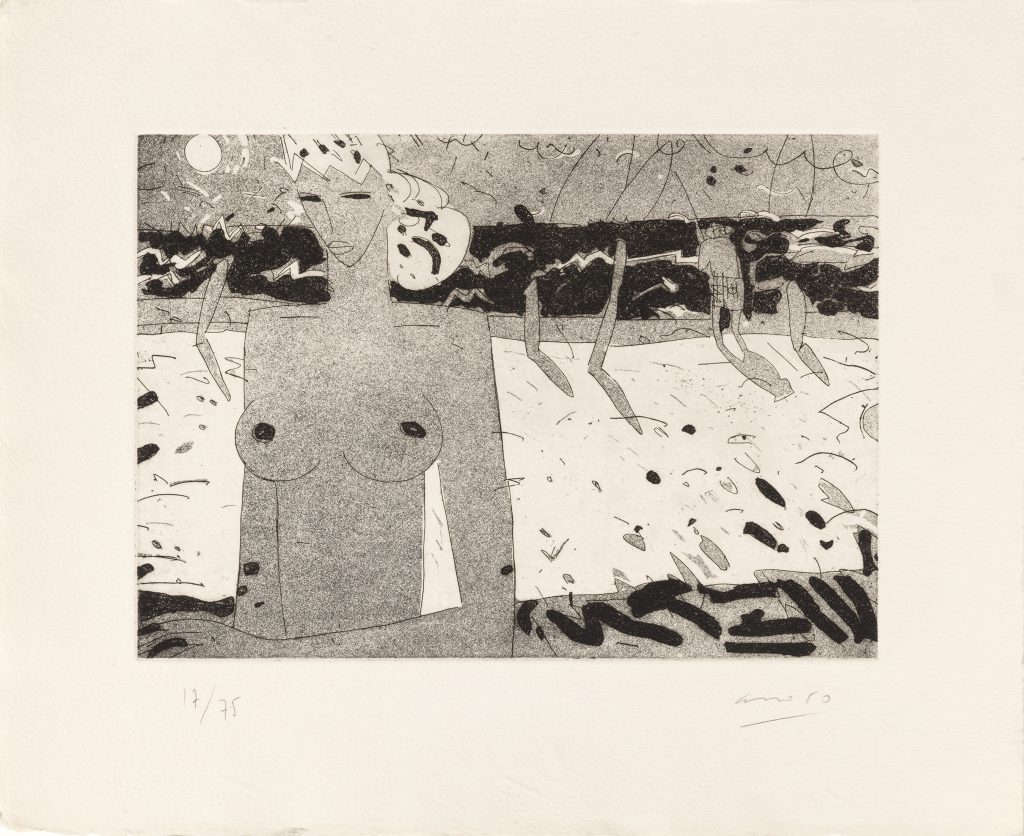
Woman (Mujer), 1997
Etching on paper, 18.50 x 23 in.
Gift of Jody G. Brotherson.
Manel Anoro (Spanish, b. 1945)
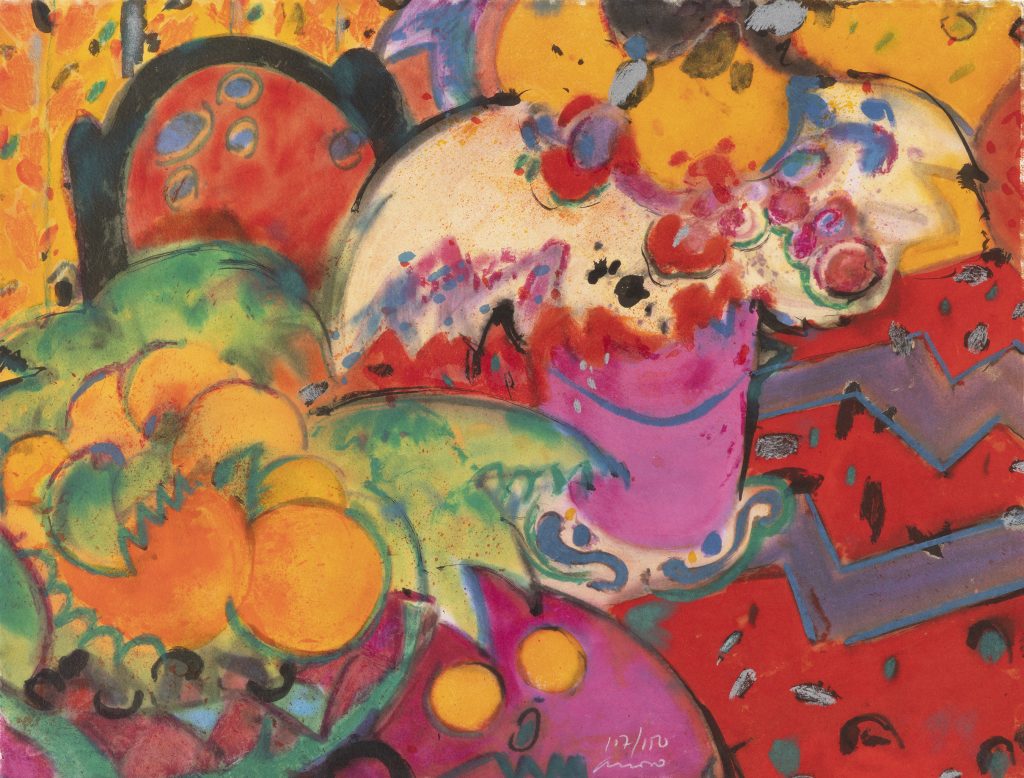
Still Life (Bodegón), 1995
Lithograph on paper, 22.25 x 29.50 in.
Gift of Jody G. Brotherson.
In tandem with these additions to the Meadows Museum’s collection of Spanish art, the museum announced that two works have been acquired for the University Art Collection (UAC). The UAC, which is often lent across SMU’s campus, is particularly strong in works by American artists thanks to the generosity of the University’s many alumni and friends. These two paintings will enhance spaces across the campus, joining other landscapes and portraits by an array of artists.
Roger Winter (American, b. 1934)

Self-Portrait, 2013
Oil on linen, 38 x 32 in.
Gift of Jere H. Mitchell, MD.
Larry Horowitz (American, b. 1956)
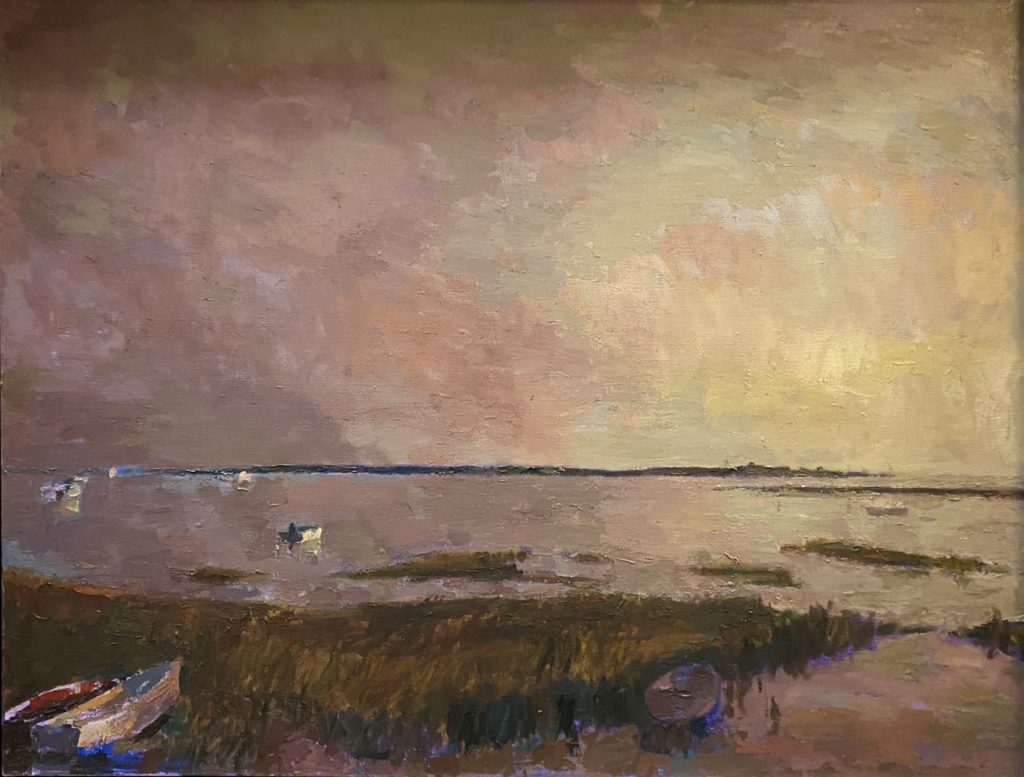
Pleasant Bay with Boats, 1999
Oil on canvas, 50.25 x 66.50 in.
Gift of Joanne Bober.