


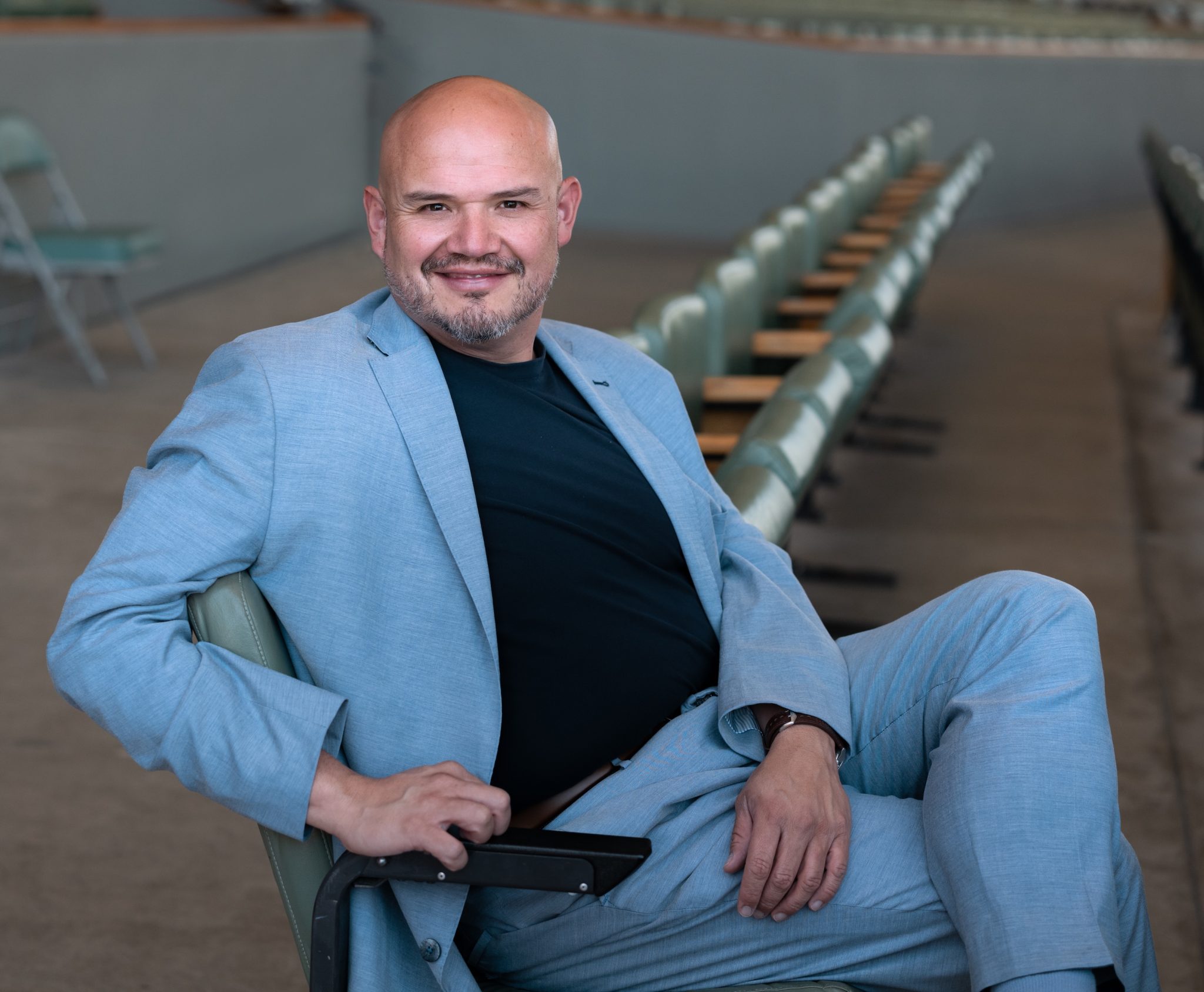
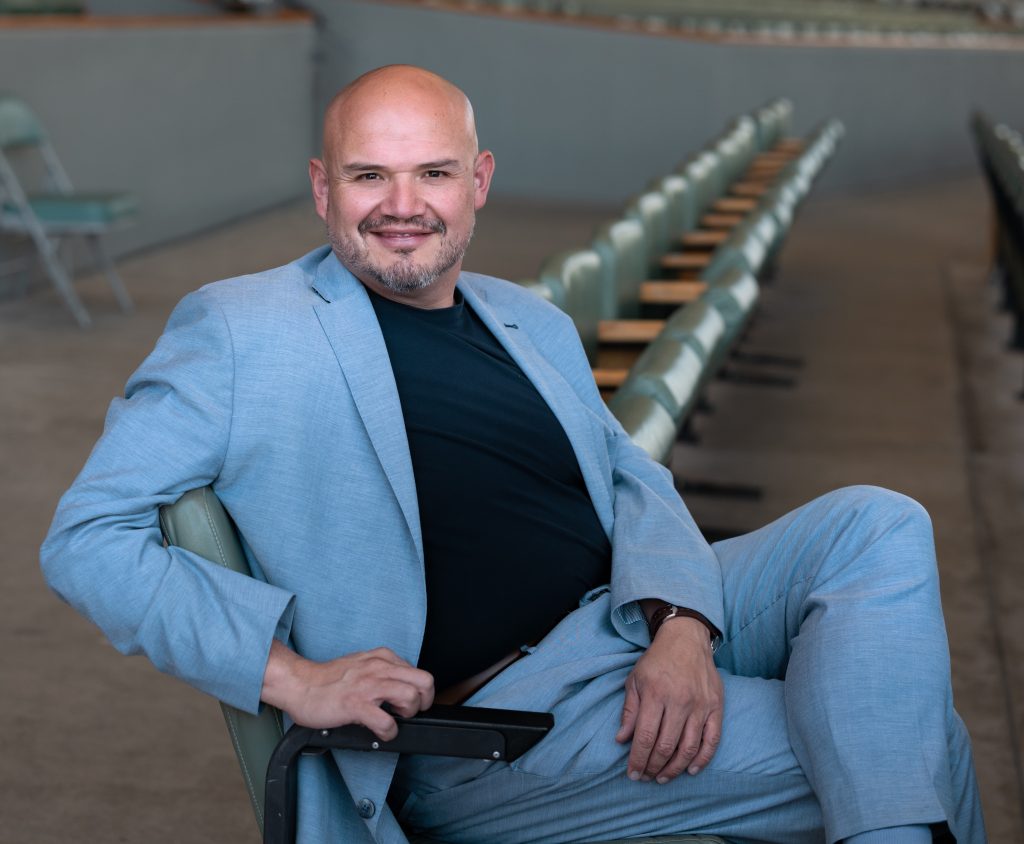
Twelve years ago, David Lomelí worked in a cubicle just outside the CEO’s office at The Dallas Opera. The office itself wasn’t much larger than his workspace. But to Lomelí, it represented something bigger. He could see the door every day. Behind it sat the leader of one of the country’s most respected opera companies. One day, he thought, he might have a shot at that job himself. Today, he has it.
As The Dallas Opera’s Kern Wildenthal General Director and CEO, Lomelí now occupies the same office he used to walk past as a young casting assistant. He laughs at the symmetry of it all. “It’s a dream fulfilled,” he says.
The route back to Dallas was anything but direct. There were years in Munich at the Bavarian State Opera (Bayerische Staatsoper), one of Europe’s great cultural institutions, where he first led casting and later international partnerships and strategy. There was the Santa Fe Opera, where he served as chief artistic officer and helped guide one of the world’s most admired summer festivals. Along the way, he built a global network of artists, directors, designers, and administrators that stretched from Germany to New Mexico and beyond.
The jobs grew larger. The responsibilities grew broader. The view from the office window changed. But something kept tugging him back toward Dallas.I realized I was helping other people execute their vision,” he says. “I wanted the opportunity to realize my own.”
The opportunity arrived at precisely the right moment. In Santa Fe, leadership changes were underway. In Dallas, Ian Derrer—Lomelí’s first boss, mentor, and longtime friend—was preparing to leave after guiding the company through executive transitions, COVID, and some of the most challenging years in the organization’s history.
When the opportunity to move back presented itself, Lomelí was eager to return. Since departing Dallas in 2021, he had remained involved as a consultant with The Dallas Opera. He knew the board. He knew the staff. He knew the city. After years of international travel, he also knew something else: being closer to family mattered.
“Let’s do it,” he remembers thinking.
In many ways, Dallas felt like unfinished business. One project especially remains close to his heart: The Dallas Opera’s Hart Institute for Women Conductors. Lomelí was part of the original team that conceived the program and served as its first manager. At the time, industry data showed that women received only a tiny fraction of conducting opportunities—only 1% of podium time in the United States. “I couldn’t believe it,” he says. “I thought we were much further along.”
Today, women occupy a significantly larger share of podium time across the industry, and Lomelí still speaks about the Hart Institute with pride. “It’s one of my artistic babies.”
His ambitions for The Dallas Opera are both traditional and surprisingly expansive. Yes, great singing is essential. He talks enthusiastically about Puccini, Verdi, and Wagner. He lights up discussing voices. But he also wants bigger theatrical experiences.
Drawing on relationships developed over two decades as both singer and administrator, Lomelí plans to bring more internationally recognized directors, designers, and productions to Dallas. If the company’s recent years have focused on strengthening musical excellence, he sees the next chapter as adding another dimension. “Great singing remains essential,” he says. “But I want great theater, too.”
Then there is the question of relevance.
Lomelí tells a story about a tiny taqueria in Mexico that became a global sensation after a single social media reel went viral. One video changed everything: the business, the family, even the neighborhood around it.
He isn’t suggesting opera should become TikTok. But he does believe arts organizations ignore digital storytelling at their peril. “We’re as good as the last reel, the last highlight, the last soundbite,” he says.
That philosophy extends beyond marketing. He sees digital engagement as a tool for building relationships, particularly with younger audiences who spend much of their lives online but increasingly crave experiences that feel real. Opera, he argues, should be one of those experiences. And not just at the Winspear.
The Winspear Opera House will remain home base, of course. But Lomelí envisions The Dallas Opera appearing across the Metroplex—in cathedrals, universities, cultural centers, suburban venues, and unexpected spaces where opera has rarely ventured before.
For Dallas to embrace opera more fully, he believes opera must first embrace Dallas. That mission feels especially personal when he talks about North Texas’ Latino community.
Whenever people learn that a Mexican-born former tenor now leads one of America’s major opera companies, he notices a reaction. “The chest goes up,” he says with a smile. He wants more people to feel that sense of ownership—not just over The Dallas Opera, but over opera itself.
That conviction is rooted partly in his own story. Years ago, a serious esophageal injury abruptly interrupted an international singing career. Recovery required years of rehabilitation. During that period, he married, became a father of a son who has special needs, and gradually transitioned into arts administration.
The change wasn’t easy. For elite singers, life revolves around protecting the voice. Every meal, every schedule, every decision can feel tied to performance. Today, the focus is entirely different. As a singer, he reached audiences one performance at a time. As a leader, he has the opportunity to shape an institution, create opportunities for artists, and influence how entire communities experience opera.
Five years from now, he hopes The Dallas Opera will occupy more space—physically, digitally, and culturally. He wants audiences to travel to Dallas the way they travel to Santa Fe or Munich. He wants more performances throughout North Texas. He wants opera to be part of the city’s everyday conversation. Most of all, he wants people to stop thinking of opera as something reserved for someone else.
“My dream is that attending the opera will become as much a part of Texans’ lives as going out for barbecue or attending a Cowboys game—something they look forward to each season and maintain a consistent relationship with year after year,” Lomelí enthuses.